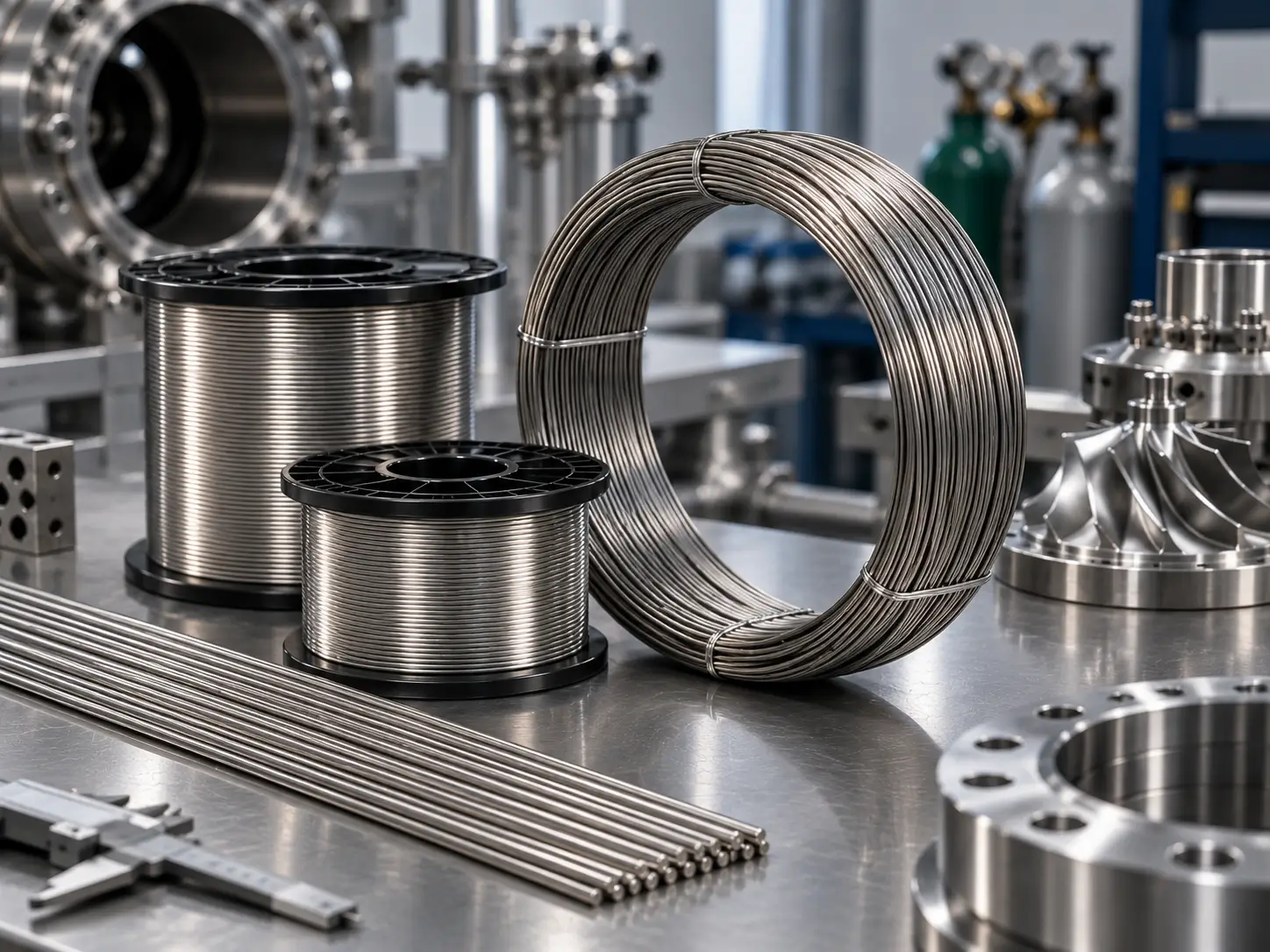
ASTM B863 Titanium Wire
Specify: Standard revision · Grade · Diameter · Condition
General titanium and titanium-alloy wire reviewed against the ordered material specification and purchase requirements.

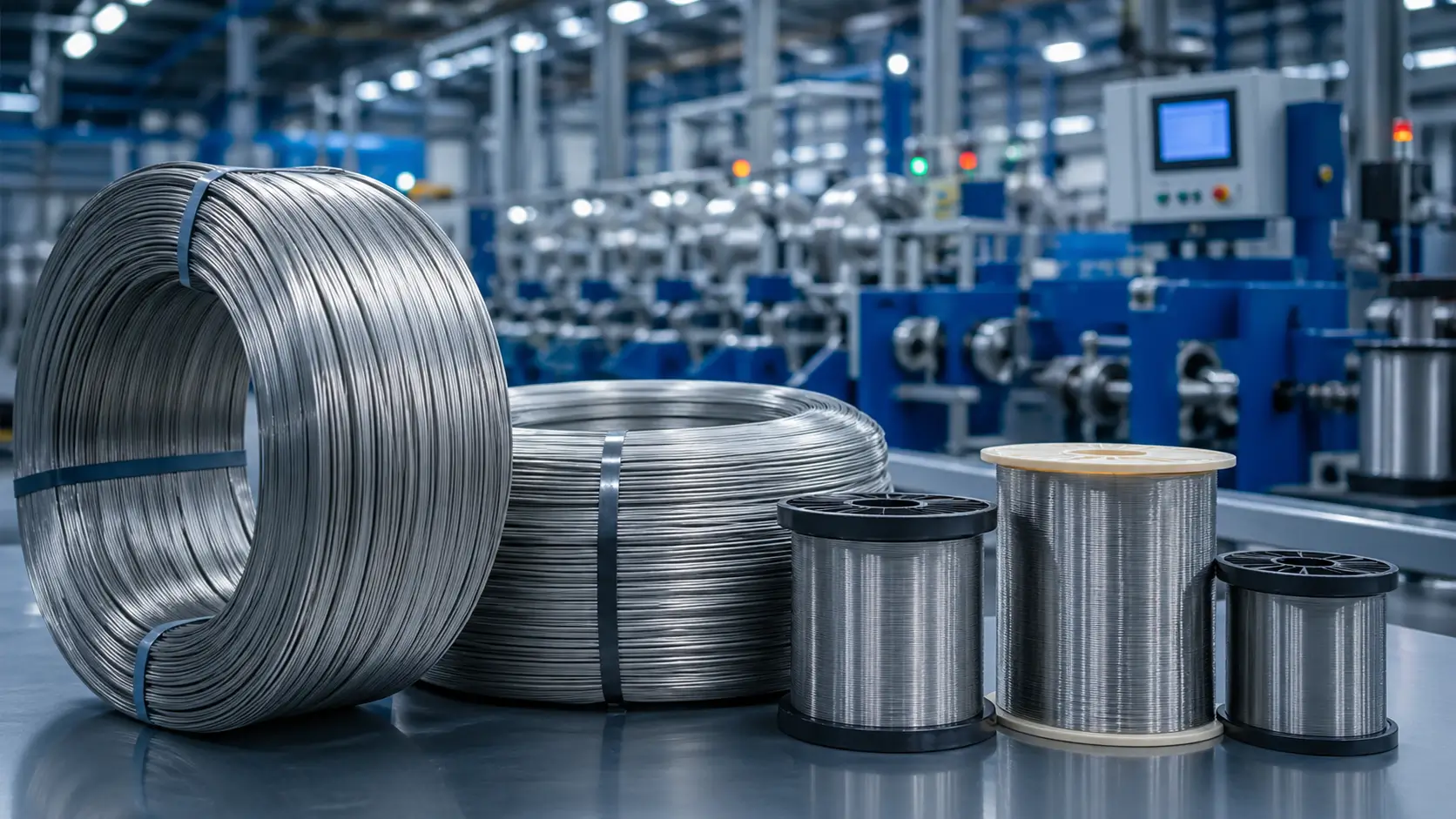
ASTM B863 Wire · AWS A5.16 Welding Electrodes & Rods
Source coil, spool, straight, cut-length and welding forms with the product type, grade or ERTi classification, diameter, condition, surface, packaging, inspection and documents aligned before quotation.
Before comparing quotations: freeze the wire type, governing specification and revision, grade or classification, diameter and tolerance, condition, surface, supply form, inspection, documents, packing and commercial basis.
Titanium Wire Range
A shared alloy name does not make general wire, welding consumables, additive feedstock or medical raw material interchangeable. Select the correct route before discussing dimensions or price.
Specify: Standard revision · Grade · Diameter · Condition
General titanium and titanium-alloy wire reviewed against the ordered material specification and purchase requirements.
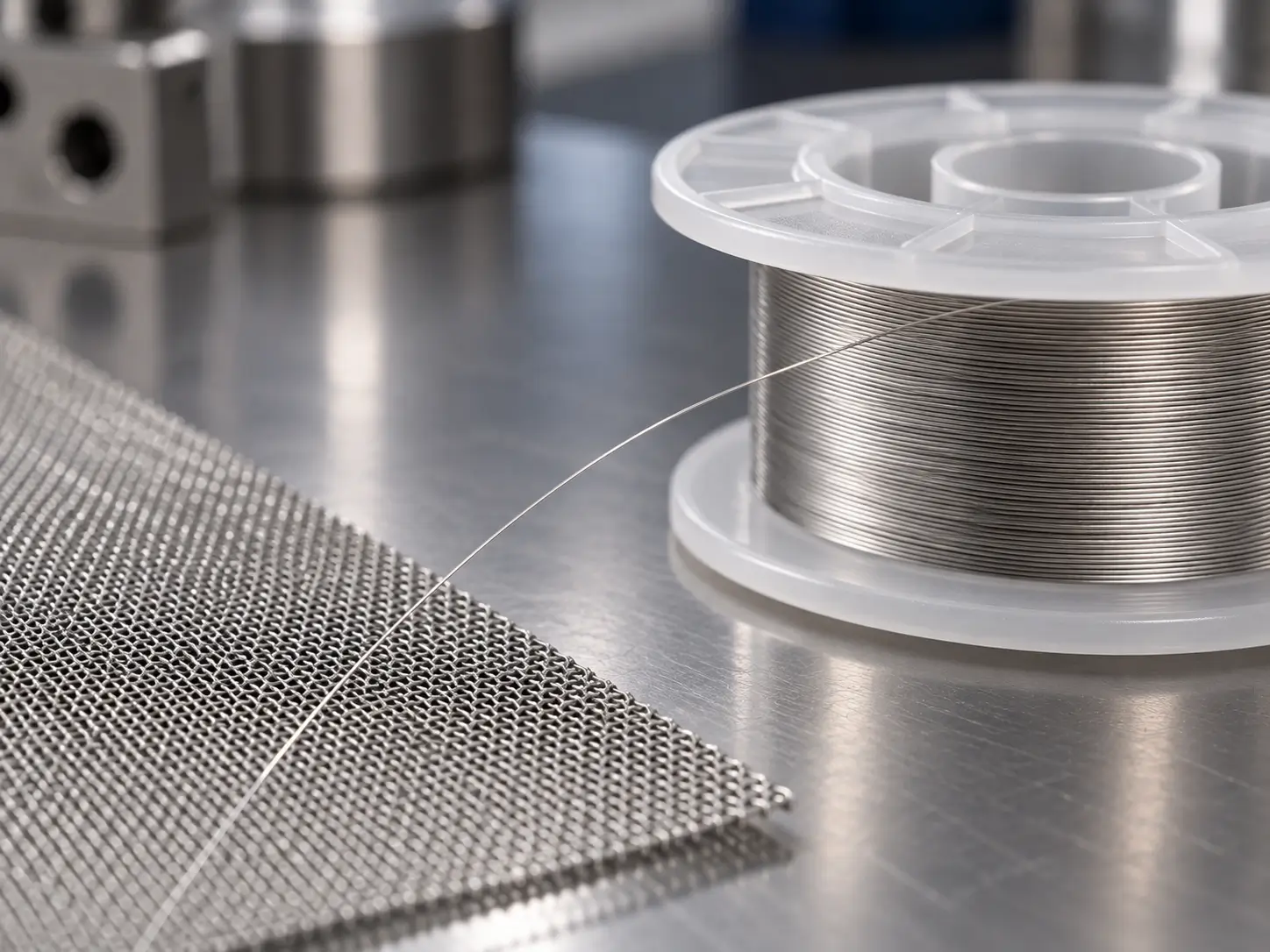
Specify: ERTi classification · Process · Diameter · Package
Solid wire electrodes, wire and cut-length rods reviewed against the approved welding and project requirements.
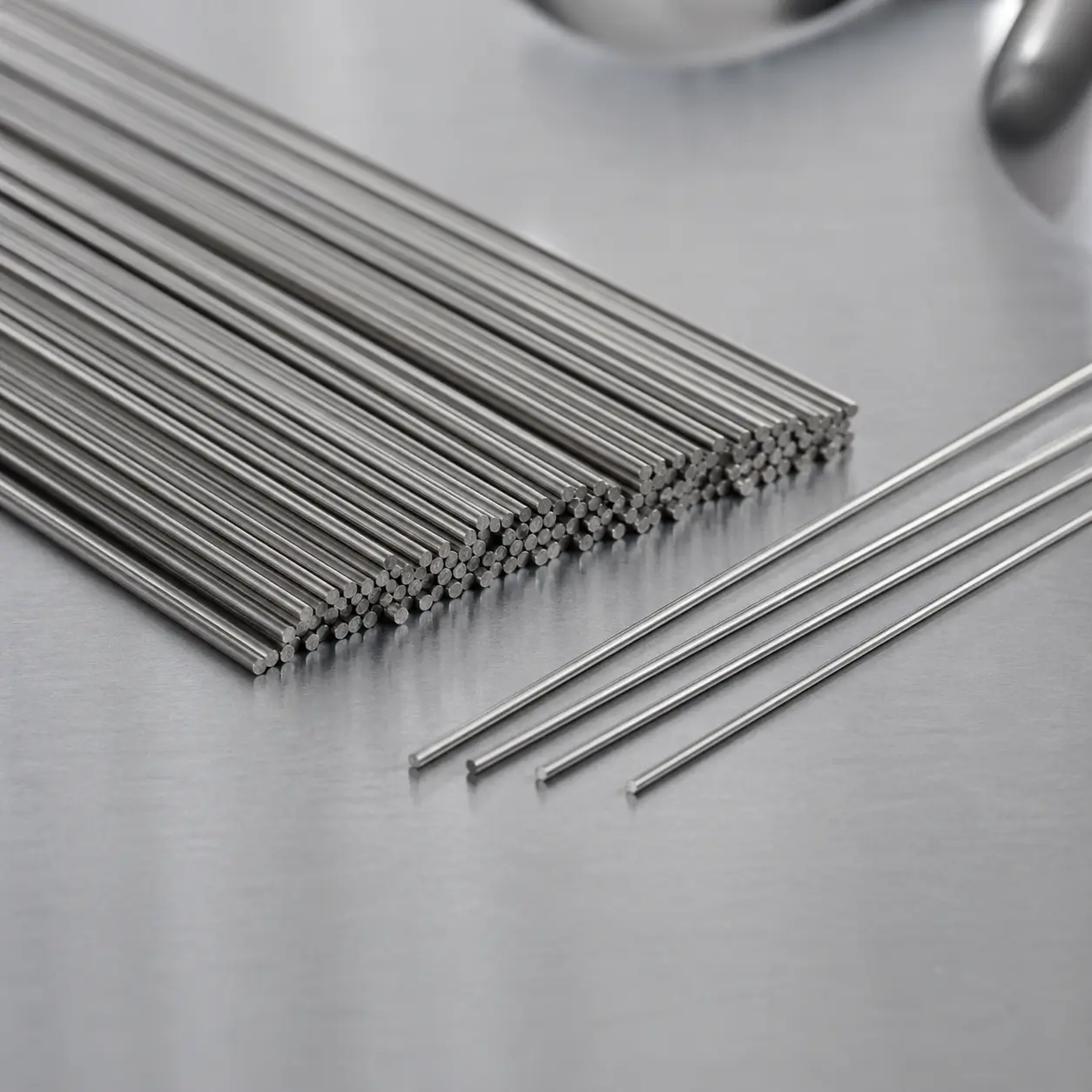
Specify: Grade · Diameter · Length · Straightness
Cut lengths for fabrication or precision processing where dimensional, straightness and surface requirements are defined.
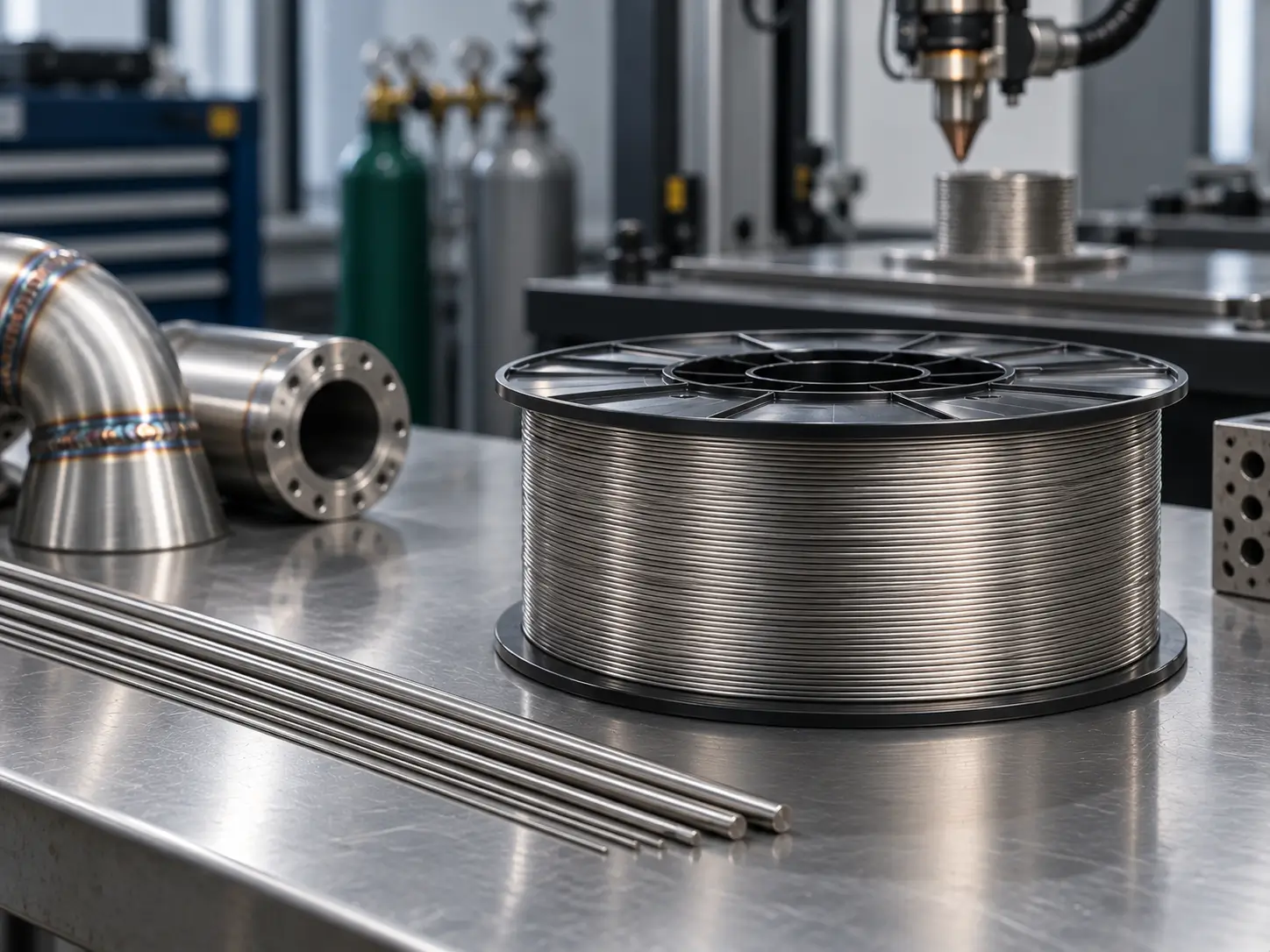
Specify: Diameter · Tolerance · Surface · Continuous length
Fine wire reviewed by drawing route, condition, handling, inspection and the downstream feeding or forming process.
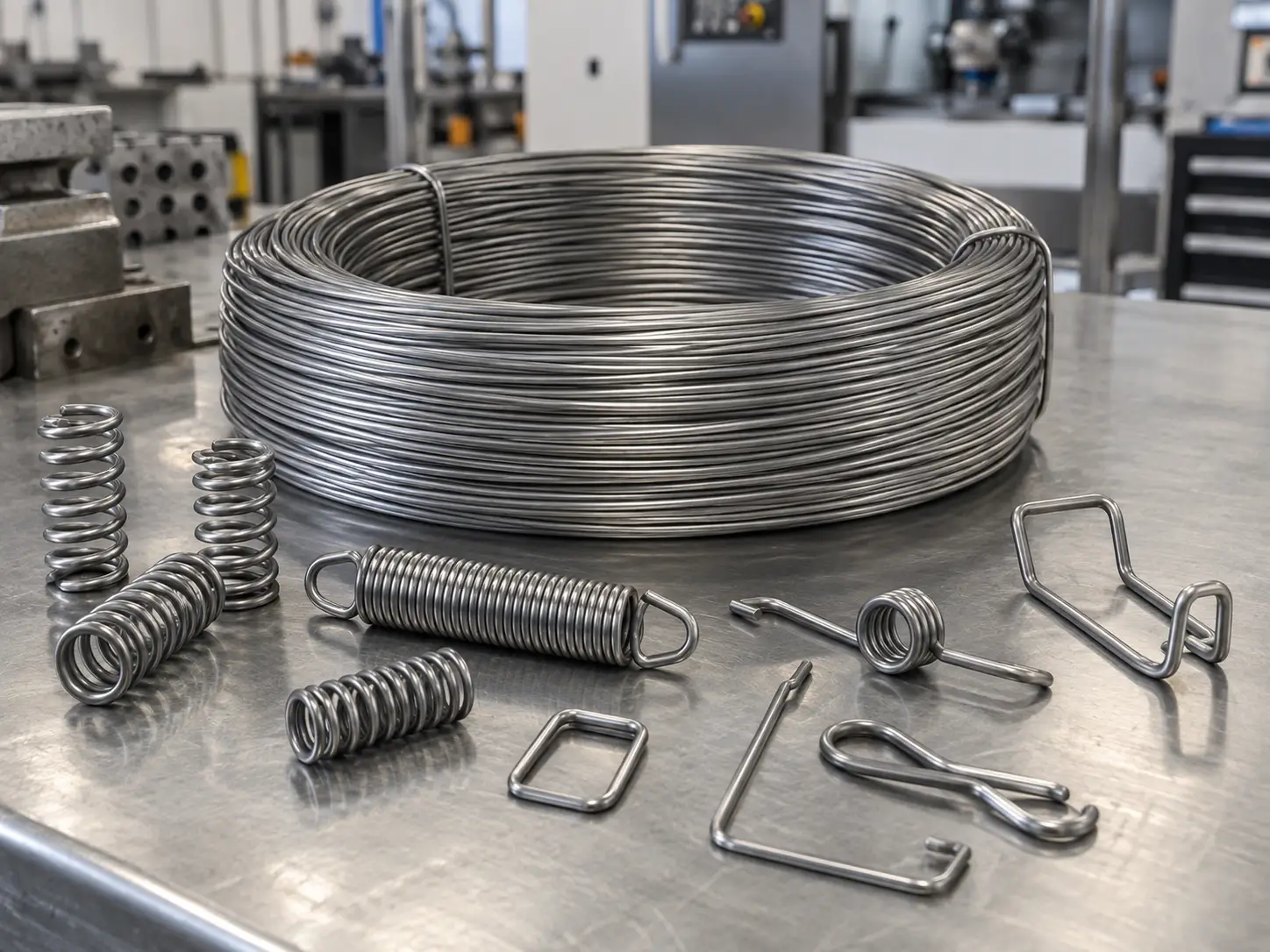
Specify: Grade · Condition · Mechanical requirement · Coil set
Wire for formed components reviewed by required strength, ductility, surface, geometry and forming validation.
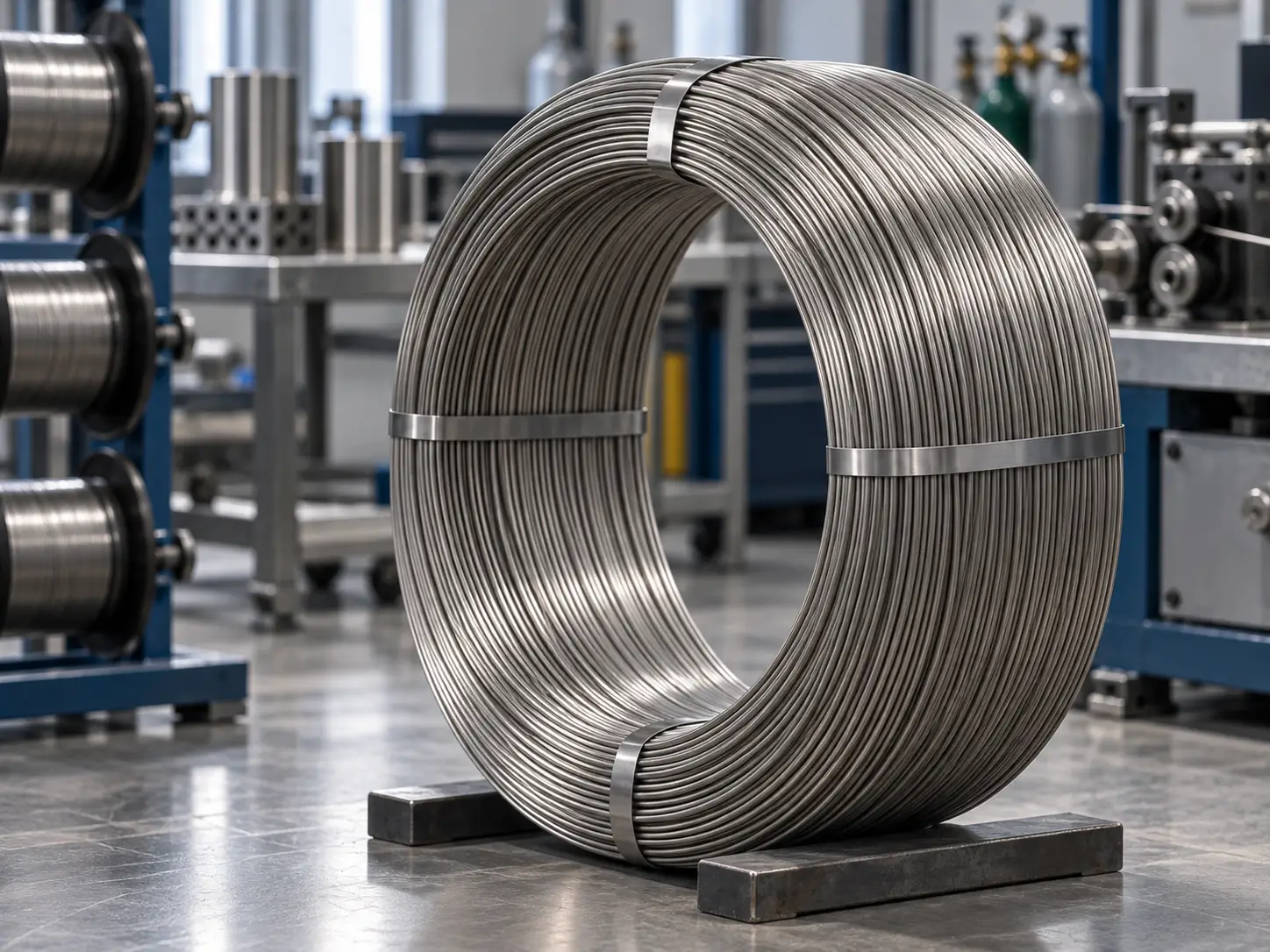
Specify: Grade · Diameter · Forming duty · Process media
Wire for hanging, tying and fixture duties reviewed against electrical contact, repeated forming and process conditions.
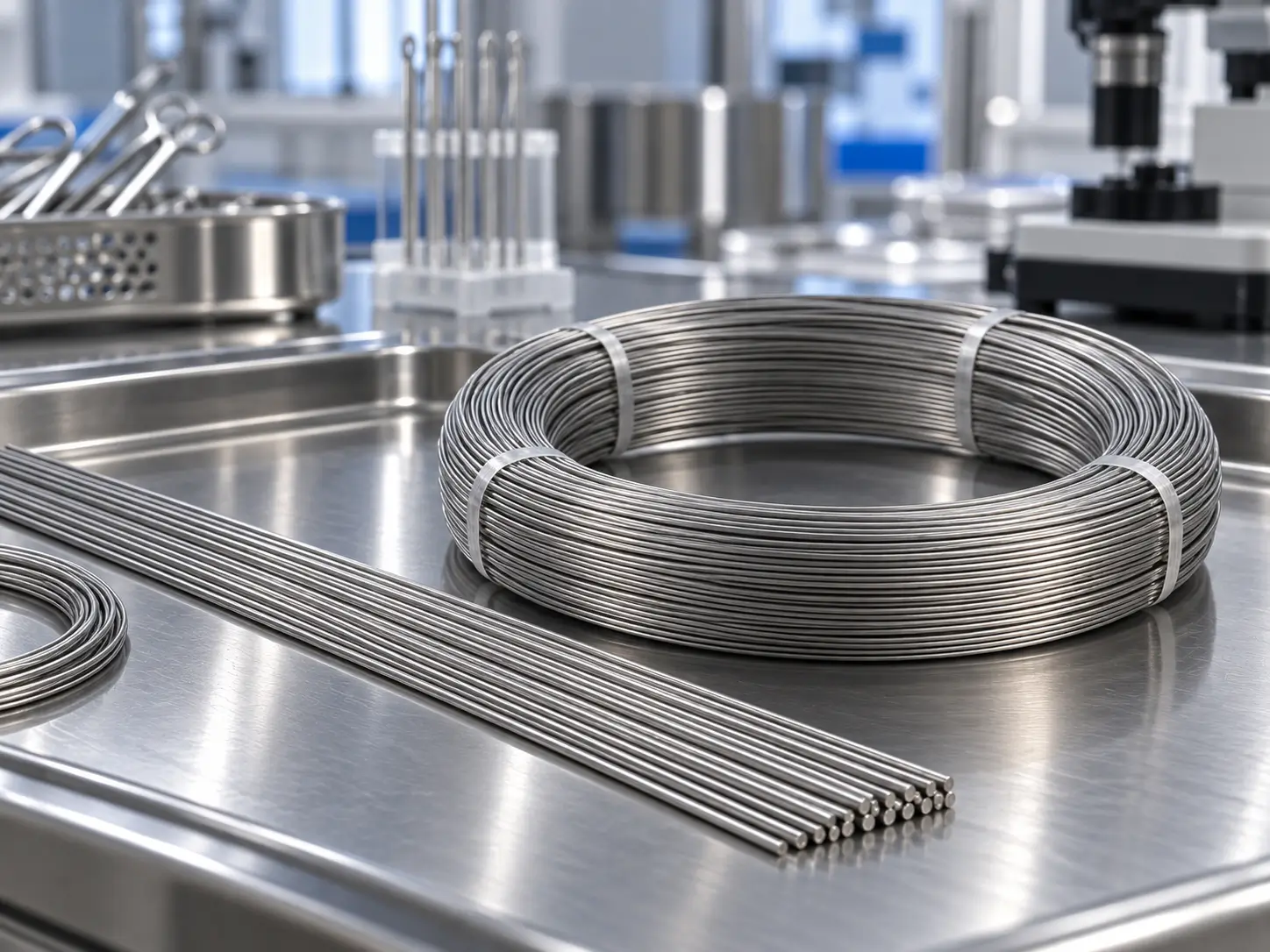
Specify: Alloy · Diameter · Surface · Spool · Feedability
Feedstock is reviewed as a customer-qualified application with process-specific diameter, surface, cast, helix and spool requirements.
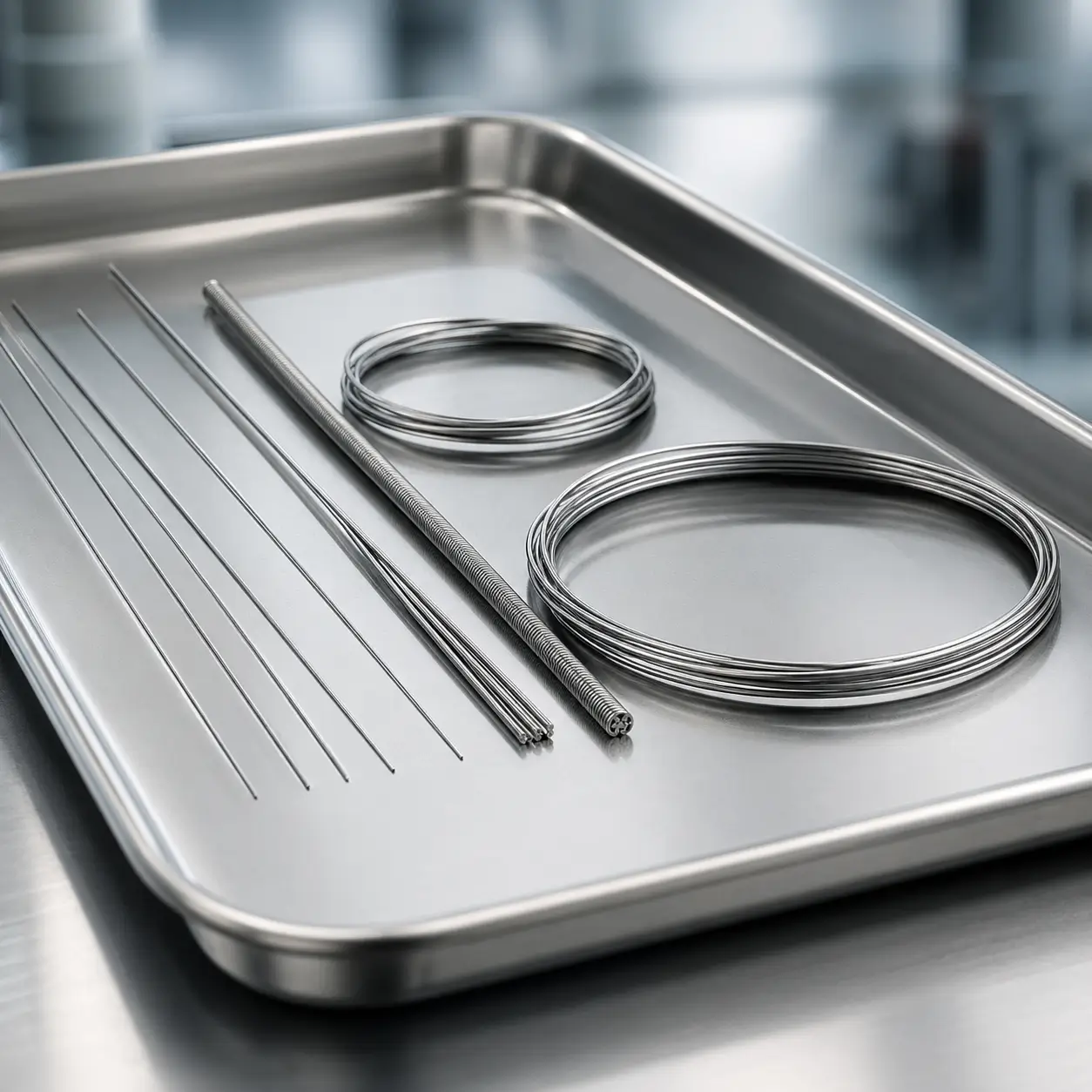
Specify: Material specification · Grade · Traceability · Approved route
Raw material can be reviewed to the ordered specification; finished-device approval and clinical suitability are outside material-supply scope.
Diameter, condition, surface, package and availability are confirmed per quotation for each wire type.
Specification Mapping
State the required revision rather than assuming the latest edition applies automatically. Customer, AMS, medical or process specifications may add requirements beyond the general material standard.
| Purchase route | Typical governing basis | Critical order inputs | Boundary |
|---|---|---|---|
| General titanium wire | ASTM B863 when specified | Grade, diameter, condition, surface, form, tests | Not automatically a classified welding consumable |
| Welding wire / rod | AWS A5.16/A5.16M when specified | ERTi classification, process, diameter, package, WPS/PQR | Specification compliance is not supplier certification |
| Medical raw material | Ordered ASTM/customer specification | Grade, route, dimensions, traceability, validation plan | Material compliance is not finished-device approval |
| Additive feedstock | Customer/process qualification basis | Alloy, diameter, surface, cast, helix, spool, payoff | Suitability must be qualified in the actual process |
Wire Selection Guide
Diameter alone is not a complete wire specification. Condition, surface, supply form and package interface can determine whether the material works in the customer’s equipment.
General wire, welding electrode/rod, forming wire, feedstock or drawing-specific material.
Specification revision, grade, UNS or ERTi classification and permitted condition.
Diameter, tolerance, roundness, straightness, surface, cleanliness and defect limits.
Coil, spool or straight length; net weight, winding, cast, helix, payoff and protection.
Titanium wire is drawn in our own facility. Heat treatment, cleaning, straightening, spooling and the inspection scope are confirmed by quotation against the agreed order basis.
Product, process and specification
Source, grade, condition and processing
Diameter, surface, straightening or winding
Agreed tests, sampling and reports
Identity, labels, documents and packing
Inside HELE Titanium
Wire drawing, straightening, cutting, spooling and inspection are carried out in our own facility. The inspection scope and documentation for a specific order are agreed in the quotation.
Application Review
Four common application groups are shown below. Each still requires its own material, equipment interface, qualification and acceptance basis.
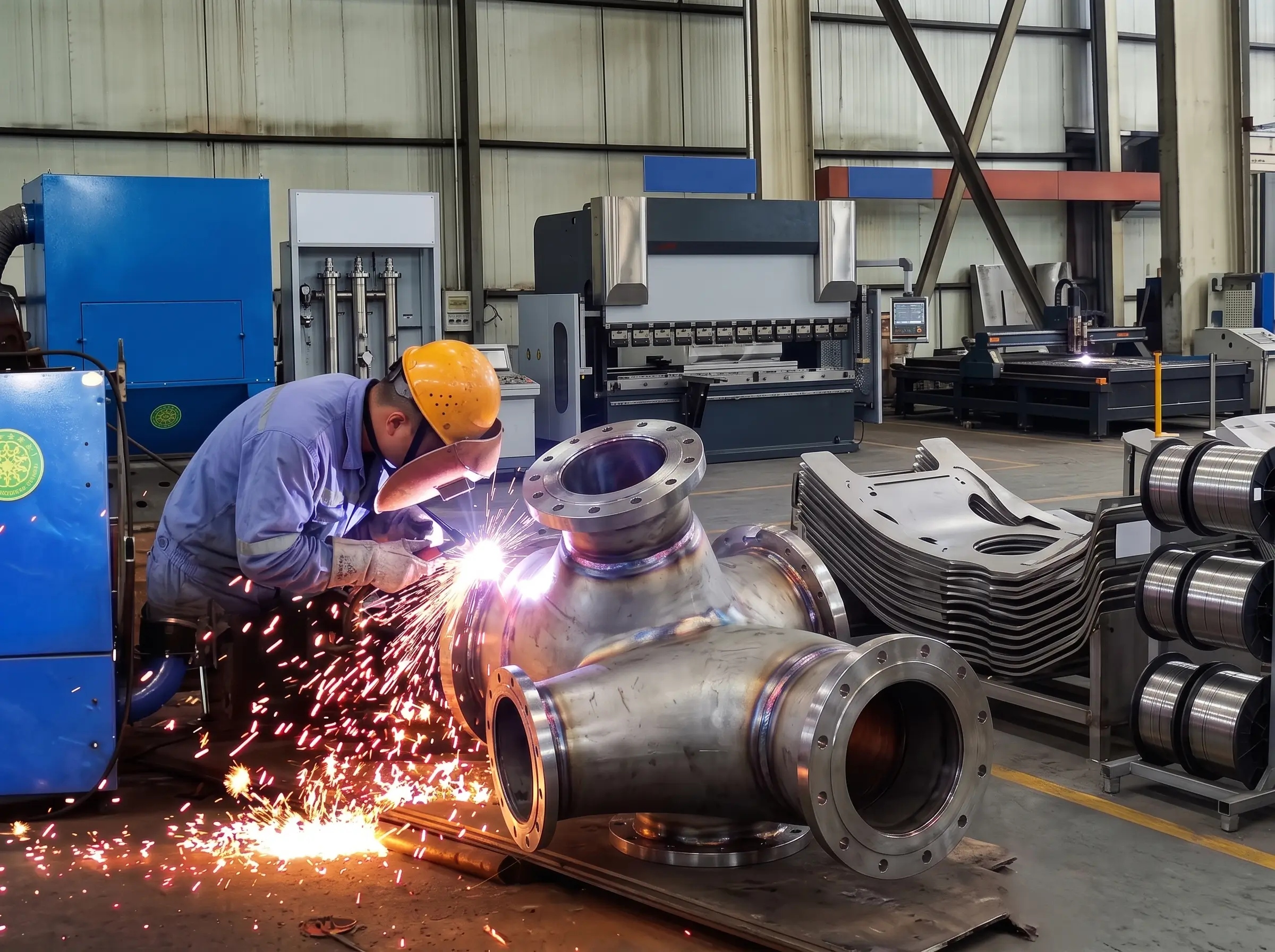
Align filler classification with the approved WPS/PQR, base materials, joint, process, shielding, service and project acceptance requirements.
Review the application context →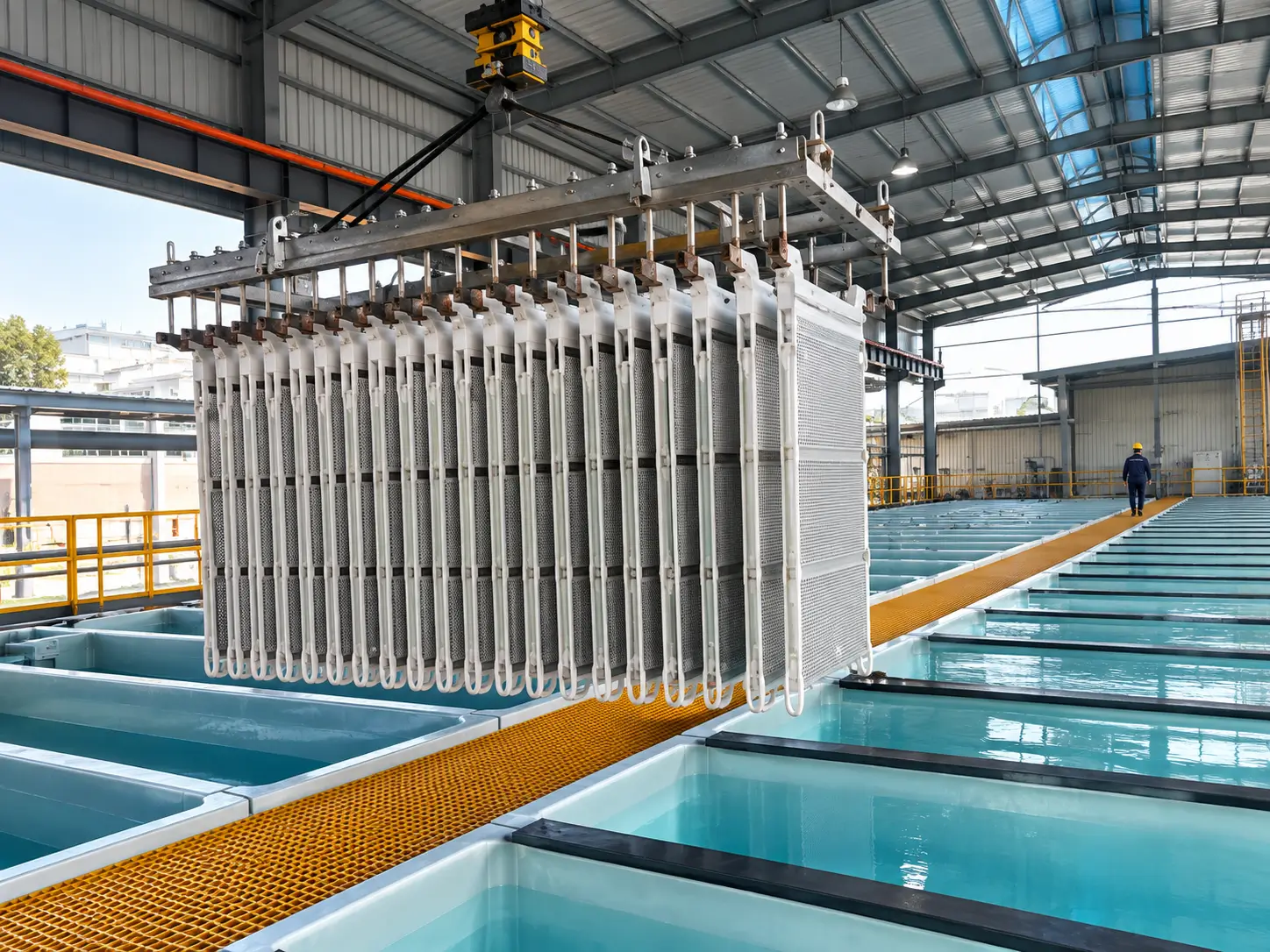
Define process media, temperature, current-transfer duty, forming cycles, contact method, grade, diameter and replacement practice.
Review the application context →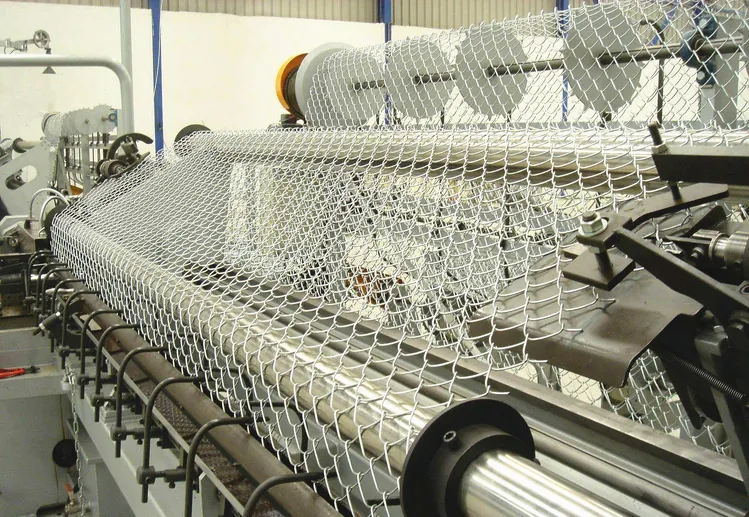
Control grade, condition, tensile or ductility requirement, surface, coil set, continuous length and downstream forming trial.
Review the application context →
Define the qualified alloy, diameter tolerance, surface, cast, helix, spool interface, payoff and process-validation responsibility.
Review the application context →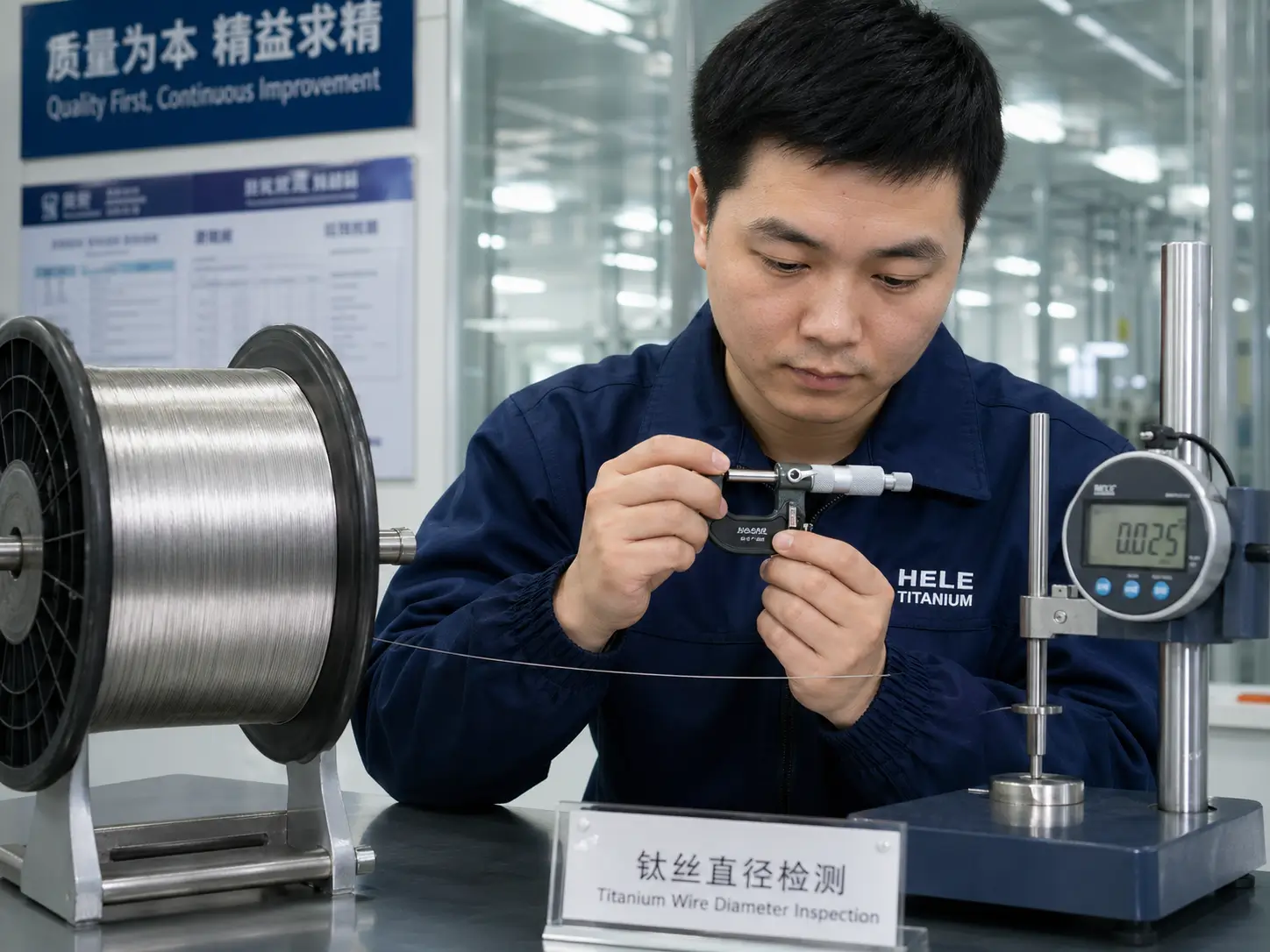
Supply Scope & Qualification
Required evidence should be linked to the purchase order, wire identity and acceptance criteria. Do not assume every test applies to every wire type.
Confirm product identity, governing specification, grade or classification, diameter and condition, surface, coil/spool/length data, tests, traceability, packing, exceptions and delivery terms. For welding wire, align the purchase with the approved WPS/PQR and project requirements.
Frequently Asked Questions
Provide the wire type, governing specification and revision, grade or ERTi classification, diameter and tolerance, condition, surface, supply form, spool or coil requirements, quantity, inspection, documents, packing and destination.
ASTM B863 covers titanium and titanium-alloy wire. AWS A5.16/A5.16M classifies titanium and titanium-alloy welding electrodes and rods. The product, classification, revision and purchase requirements must be stated separately.
These forms can be reviewed, but diameter, grade, condition, continuous length, straightness, spool geometry, net weight and availability are quotation-specific.
Selection should follow the approved welding procedure, base materials, joint design, service conditions and project specification. A general grade-matching rule is not a substitute for WPS/PQR and engineering approval.
No. A raw-material specification does not establish device approval, clinical suitability, sterilization validation or finished-device regulatory compliance. Those responsibilities remain with the medical-device manufacturer and its approved system.
No. Test method, sampling, acceptance criteria, reporting and witness requirements depend on the ordered specification and intended process. They must be agreed before quotation and order release.
Provide the product type, standard, grade or classification, diameter, condition, surface and supply form where known. HELE can review open technical and commercial items before quotation.